
How everyday misattunements shape closeness more than we realise
There are moments in relationships that leave no mark on the surface but land quietly, somewhere deep inside.
You're speaking, and your partner walks into the room and asks a practical question before responding to you. You're sitting together on the sofa and offer a small thought, and it drifts past them without catching. You reach for a bit of closeness, and their answer comes politely, their voice a little thinner than usual, eyes staying on what they were doing.
Nothing sharp happens. Nothing that would justify a conversation. But something in you pulls back a little.
Sometimes it is the way their gaze doesn't lift when you expected it to. Sometimes it's the quick inhale before they reply. Sometimes it's the slight tightening in their jaw that tells your body it isn't the right moment.
You are still beside them, still in the same room, yet something in you dims. A quiet, private ache. I'm here... do you see me?
It's often too small to name out loud. But the nervous system registers it immediately.
What happens inside when you feel unseen
The body notices first. A shallow breath. A small tightening across the diaphragm. Your voice losing a shade of warmth before you realize it.
You might sit a bit straighter. Or fold in a little. Or keep your face still so nothing slips through.
There's often a half-beat – a tiny interior drop – where something tender doesn't find its place. The conversation continues, but a slight vigilance settles in your chest. You follow the moment more closely than your words show.
Quiet questions rise. Maybe they're preoccupied. Maybe it's nothing. Maybe you shouldn't need this much.
Another part of you knows the longing is human, not excessive. It's the simplest need: to register in someone else's field. But the doubt still appears, automatic, shaped by earlier moments in life when you learned not to expect much.
You continue with your day. Yet some part of you stays slightly turned away, bracing for the next misread.

"It's the simplest need: to register in someone else's field."
What begins to happen between you
When you feel unseen, you often become quieter without intending to. You share less. Answer more briefly. Let topics pass that you would normally touch.
From the outside, it can look like nothing more than mood. Or tiredness. Or being absorbed in thought.
Your partner senses something shift but can't locate the reason. They ask a question and your answer is fine, but there's a thinness to it. They hear the change in your tone but can't tell if it's about them or the day. A faint confusion settles into their posture – shoulders a little higher, breath a little quicker.
So they adjust too. They hold back more than they need to. They give extra space, unsure whether they're offering comfort or creating distance.
The gap between you grows not through choice, but through misread signals: your protective quiet mistaken for self-containment, their carefulness mistaken for disinterest.
Two nervous systems circling each other gently – but not quite meeting.

Why this happens even when there is love
This experience of invisibility does not come from lack of care. Often, it comes from mismatched ways of attending.
One partner may have learned to notice every shift in tone or timing to stay safe in earlier years. The other may have grown up needing to stay contained, to avoid overwhelming anyone. Both approaches make sense. Both have served real purposes.
But together, they can miss each other by inches.
Stress sharpens these misses. Fatigue narrows awareness. Old echoes slip into present moments – especially when a partner's breath shortens or their voice flattens in the very way someone once did when they were pulling away.
The partner who feels unseen experiences this as familiar – not new, but known in the body. A quiet ache that says, Be careful. Meanwhile, the other partner thinks the moment is neutral and has no idea they've brushed against something tender.
Two people, carrying different nervous system histories, meeting a single moment from different angles. No blame. Just the fragile timing of being human.
What makes repair possible
Repair rarely begins with big conversations. It often starts with something nearly invisible.
A partner hears the shift in your voice – the slight thinning – and doesn't rush past it. Their next breath comes slower. Your shoulders ease a fraction. The moment doesn't drift the way it usually does.
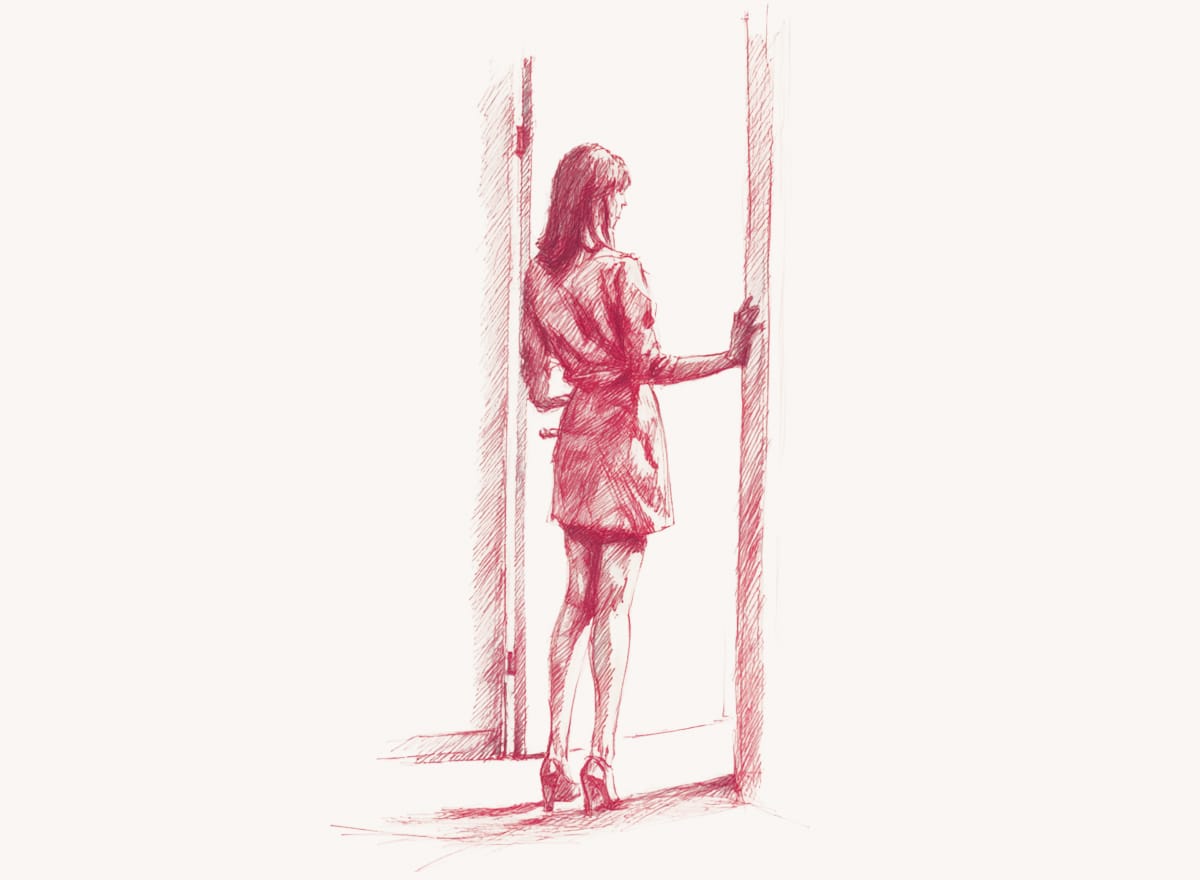
Another evening, after a brief rupture, one of you stands in the hallway with your hand still on the doorframe. Not leaving. Not returning. Caught between protecting yourself and wanting to stay.
The other turns toward you, not fully, but enough that you see the movement. Their eyes lift for half a second – a check-in without words, a small softening at the edge of their face. Your body recognizes it before your mind does.
Nothing is repaired. But the slide stops. The nervous systems meet for a moment instead of passing each other.
These small interruptions teach the body slowly, over time, that it isn't alone in the effort. That presence is possible even in moments that once felt hopeless.
"Relationships learn slowly. Bodies learn slower still. But they do learn."
A quiet, grounded closing
Feeling invisible beside someone you love is not a sign that the relationship is fading. It is a sign that something inside you – something old, something honest – is asking to be recognized.
And it does not mean your partner cannot meet you. Most of the time, they simply don't realize they missed the moment. They are navigating their own limits, their own histories, their own ways of caring.
Relationships learn slowly. Bodies learn slower still. But they do learn.
One softened breath. One moment of staying instead of turning away. One glance that holds a little longer than before.
These are not grand gestures. They belong to kitchens, doorways, and quiet evenings. They are the small places where connection relearns its shape.
Not suddenly. Not with certainty. But steadily – in the places where you most needed to be seen.
in quiet companionship,
Gustav